
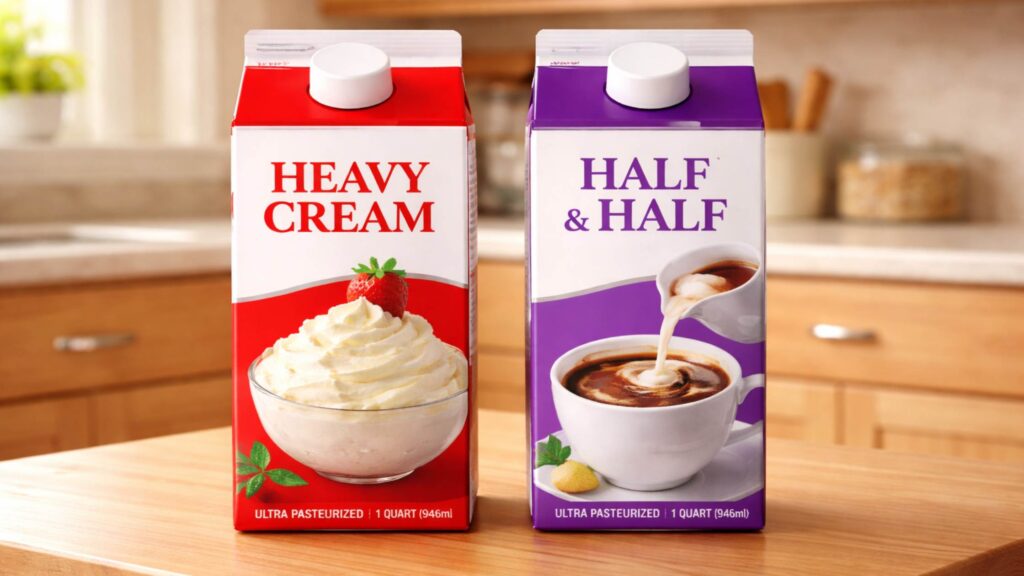

I use milk and half-and-half far more often than I use heavy cream. Heavy cream tastes great in all your favorite recipes. It’s a fast way to add richness to your meals. It also costs more, spoils faster, and usually does more work than a recipe needs.
When half-and-half or milk deliver the same result, I choose the alternative (and save money). Every time. That choice is not about cutting corners. It’s about cooking with intention. Still, some recipes rely on heavy cream to do real work behind the scenes, like when your recipe calls for true depth or your looking for something whipped and airy. Skip it in these cases, and the dish pays the price in texture, flavor, or structure.
This guide draws the line clearly so you know when a substitute works and when it becomes false savings.
Half and Half vs Heavy Cream: The Key Differences
The difference comes down to fat content, structure, and how the dairy behaves under heat, not just how creamy it tastes.
- Heavy cream: ~36–40% milk fat
- Half and half: ~10–12% milk fat
That gap matters more than most people realize. Fat goes beyond indulgence. In real-life cooking, it quietly does three essential jobs:
- Thickness: Heavy cream thickens naturally as it reduces. The alternative stays thin unless you help it.
- Stability: Higher fat content helps sauces stay smooth rather than breaking when heat or acid is involved.
- Structure: Fat is what allows cream to whip, aerate, and hold its shape.
Half-and-half lacks the fat needed to handle those structural jobs on its own (Dairy fat reference). That’s why substitutions succeed or fail. If a recipe relies on cream to behave, not just taste creamy, my cream substitution needs a little backup, or it’s simply the wrong choice.
When Half and Half Works
I run into this situation most often. I’m halfway through cooking, the recipe casually calls for heavy cream, and I pause, not because I’m against cream, but because I know what the dish actually needs…I’m just not willing to spend the extra for the heavier cream. So, I substitute and back it up with a little cornstarch or flour.
Most of the time, I reach for half-and-half. Sometimes even 2% milk.
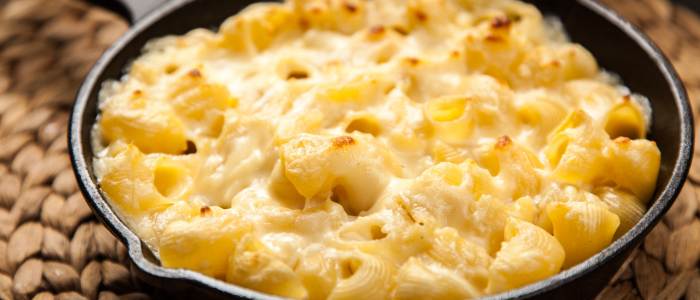
In everyday cooking, cream exists to make food feel richer and more comforting, not to perform kitchen gymnastics. When I’m making a sauce that needs to stay smooth, a pasta dish that’s going to simmer while I juggle a few other things, or a casserole where everything melts together anyway, a cream alternative does precisely what I need it to.
The food still tastes good. The texture feels right. No one eating it stops mid-bite to question my dairy choices or cooking methods. Although if they did, they’re certainly welcome to cook the meal themselves while I do the relaxing.
When a sauce needs more body, I add a small amount of flour or cornstarch and let it simmer gently. That tiny adjustment gets me where I want to be, without opening a pricier carton or wasting something I won’t finish. That’s where half-and-half really shines, giving me the result I want without paying for performance I’m not actually using.
When a Cream Alternative Fails
Some recipes ask cream to do more than add richness. They need it to hold shape, create lift, or lock in a specific texture. Half-and-half cannot do that job.
I learned this lesson the hard way. I chilled it. I whisked harder. Added cornstarch, and then I crossed my fingers. The fat still wasn’t there. Instead of soft peaks, I got sad disappointment. Instead of a lush texture, I got something thin and unstable.
Cream also matters when it acts as the primary thickener. In those recipes, heavy cream does the heavy lifting. Swapping it out doesn’t save money if the final dish ends up in the trash.
That’s where I draw the line. When texture is the point, heavy cream earns its spot in the cart.
How to Substitute for Cream Properly
Substitutions either work quietly or fail quietly. Most failures start with the same mistake. People treat half-and-half like a magic stand-in and swap it straight across without changing anything else.
A 1:1 swap sends things sideways.
I get better results when I pause and ask what the cream actually does in the recipe. Then I give my cream substitution a little backup.
Better approach:
- Start with half and half instead of heavy cream
- Add a small amount of cornstarch or flour to compensate for the lower fat
- Simmer gently so the thickener activates without scorching
That shift changes the outcome. Sauces stay smooth. Pasta dishes feel cohesive. The food tastes rich without asking the substitution to do a job it wasn’t built for.
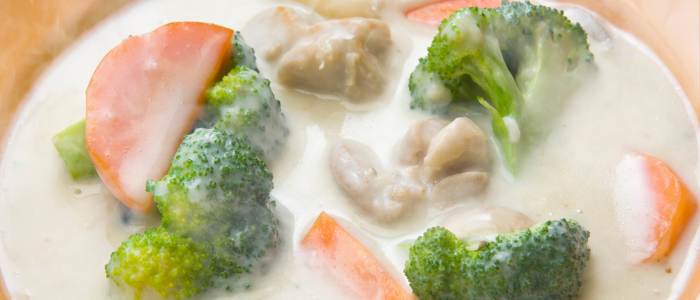
This method works well for sauces and savory dishes, like mac and cheese. It fails with desserts and recipes that depend on a thickening agent for whipping, structure, or aeration. Push it there, and you usually end up back at the store anyway.
Better Heavy Cream Substitutes
I get more selective here. If half-and-half isn’t enough, I don’t automatically reach for heavy cream. I look for the option that solves the problem without creating new ones, like wasting money on ingredients I won’t use again.
Here’s what I actually use and why:
- Whole milk plus butter when I need more fat, but don’t need whipping or stiffness. It’s a practical workaround and usually uses things I already have.
- Evaporated milk when I want body and richness without the price tag of cream. It’s convenient for soups and sauces, whether your make these stove top or in an Instant Pot.
- Dairy-free heavy cream alternatives when dairy isn’t an option for someone dining with you. These can work well, but I always check fat content first because results vary.
Reading labels matters most here. Not all substitutes behave the same way, and some are creamy in name only. If I’m going to substitute, I want to know why it works, not just hope it does.
What to Read Next
- 10 Cheap Meal Ideas That Save Money and Time
- Simple, Affordable Foods to Strengthen Your Immune System
- How to Save Money on Groceries Without Clipping Coupons
- Can Frugal Living Help You Enjoy More for Less?
- Start Living Frugally with These Easy Home Swaps
Can Half and Half Replace Heavy Cream? The Final Answer
I keep half-and-half in my fridge because it solves everyday cooking problems without draining my grocery budget. When you use cream to add comfort, smoothness, or a little richness, a cream alternative is the smarter choice. When a recipe needs fat to create structure, texture, or lift, I stop trying to save a few dollars and use heavy cream.
That balance defines how I cook and live frugally. I don’t swap ingredients just to say I did. I choose substitutes that work and skip the ones that create false savings. If you want practical, no-guilt kitchen guidance, keep reading the blog. I share advice to help you cook well, spend smarter, and feel confident in the choices you make.
Enjoyed This Article?
Subscribe to the Frugal Hen newsletter for practical money ideas, free printables, honest stories from my own journey, and smart ways to spend less without feeling deprived.
Image Credit: © George Dolgikh via Canva.com | © Aflo Images from Aflo via Canva.com