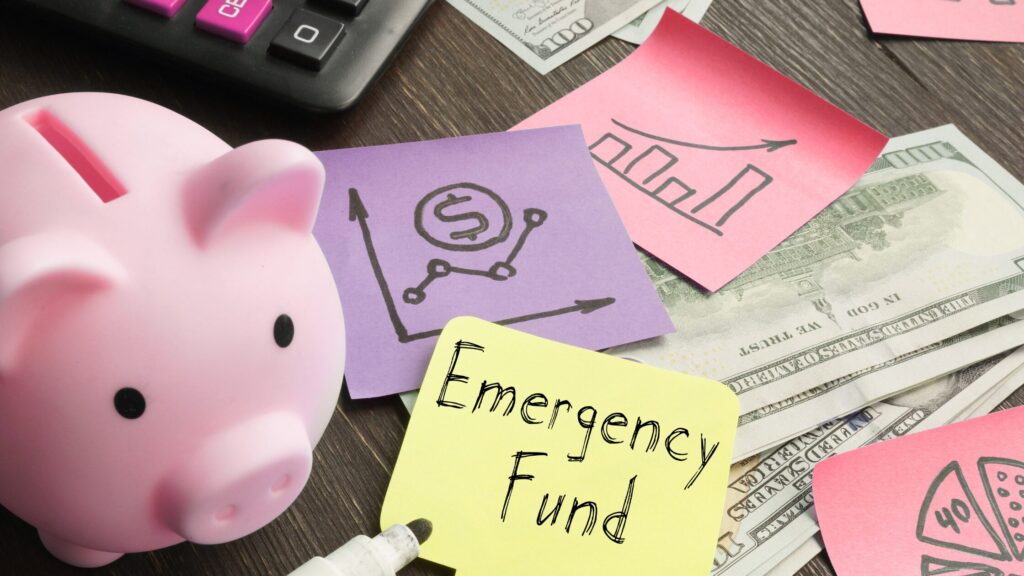

Building an emergency fund when money’s tight used to feel impossible. There was always something that needed the money more, and most months, I was trying to keep our heads above water and things from falling apart.
I remember one night on the couch after everyone went to bed, staring at numbers that didn’t work. I had overspent and didn’t have rent money. I cried and stressed myself into heart palpitations. In that moment, I knew things had to change. My family deserved better, and I needed peace of mind.
What An Emergency Fund Really Is
An emergency fund is money you set aside as a financial cushion for life’s unavoidable moments — things you don’t see coming. Car repairs, heating oil, medical bills, income gaps. It buffers you between those “something happened” and “everything falls apart” moments.
The Federal Reserve reports that many Americans still struggle to cover small, unexpected expenses. So, if you’ve ever felt behind, you’re not alone. There are real challenges to saving money, especially in households today.

How Much You Actually Need
You’ve heard the advice: save 3 to 6 months of expenses. That’s helpful in the long term, not when you’re starting from ground zero. Aim smaller.
Your first goal is $500, then $1,000. That covers most everyday emergencies without forcing debt. From there, build toward one month of expenses. But don’t stop… keep going. Personally, I aim for 12 months, not 6 months. Today’s job market is still incredibly tough.
The last time I lost my job, I was out of work for 18 months. Side gigs were the only thing that helped us “float” through it until I landed my current job. A 12-month emergency fund sure would’ve made life less stressful during those months.
If you’re wondering how much is enough, keep enough to prevent panic when something breaks or goes sideways.
Why Most People Fall Short
People don’t fail for lack of caring, and life doesn’t pause just because you’re having a moment.
I’ve lived this. Kids need things constantly — clothes, school activities, doctor visits. The car needs maintenance. An unexpected bill arrives precisely at the wrong time. It never stops. My child missed a senior trip abroad because I didn’t have the money to send her. Moments like those stay with you because, as a parent, we always want to give our kids the best life possible.
Then there’s the start-stop cycle. I’d save $20 or $50, then something would come along and wipe it out. It’s frustrating and feels like you’re not making progress. That’s why people struggle to save for emergencies. It’s not discipline; it’s constant disruption.
Where To Keep Your Money
Your safety net needs to be easy to access but not easy to dip into casually. A high-yield savings or money market account works wonders.
These accounts separate your money, allow quick access, and earn interest.

When To Use Your Fund
This is where clarity matters. A real emergency keeps your life running, and it’s never convenient or optional.
I dipped into mine for heating fuel recently. We use kerosene, and when we were almost out, I ordered 50 gallons to get through the month. It cost $314, and I felt the pain when it came out of our bank account. But as I mentioned, that wasn’t optional; that was heat.
If it protects your home, your health, your income, or your family’s stability, it counts. That’s what your financial safety net is there for.
How To Start With Almost Nothing
We have some great budgeting apps today, but that’s not where I started. I started with a notebook and tracked every dollar on paper so I could see where it was going. That changed my decisions while I learned a few things about our monthly spending habits.
Then I saved what I could — $20, $50, whatever I could reasonably tuck away. It wasn’t long-lasting, but it was a start. If you’re wondering how to build a financial cushion when you’re broke, this is it.
Start small and stay consistent. For a simple place to begin, I created a free printable savings challenge.

Simple Ways To Build It Faster
Once you’ve started, make saving easier. My biggest money hack was paycheck automation.
Now, 80% of my paycheck goes to paying bills and other expenses, and the other 20% is automatically saved. It just happens, which removes the daily pressure of deciding how, when, and how much to save.
A few ways to build faster:
- Automate transfers on payday
- Redirect one small weekly expense
- Save part of any extra income or refunds
- Keep savings out of your main spending account — This is a BIG one!
Small systems beat big intentions. Set it up once, and it keeps working in the background… no extra effort required.
What To Read Next (Because You’re On A Roll)
- 11 Genius Money Hacks to Save More Cash
- 7 Easy Steps to Financial Freedom This Year
- 7 Best Ways to Make Money Online
Your Emergency Fund Starts With One Smart Move
I’m still early in this journey, and I expect to use most of my savings for a major move, which means starting again. Ugh… but I’ve found my bearings, and I’m ready for it.
This time is different. I have a system and awareness, and I know what even a small financial cushion does — it gives me peace of mind.
If you feel like you can’t save for emergencies, I understand — I’ve lived it. But I’m also here to assure you that you can. Even $5 or $10 is still progress. Start somewhere… start today.
A financial safety net isn’t about perfection. It’s about starting where you are today and making progress so your future self has breathing room when life happens. Subscribe to the blog to stay in the loop!
Image Credit: © Andrii Dodonov from Getty Images via Canva.com, © Karola G from Pexels via Canva.com, © Rendery from Getty Images Signature via Canva.com, © Stefan Nita’s Images via Canva.com
 0
0 0
0 20
20