

I once thought frugal living meant pinching every penny and saying no to anything that looked or felt nice. I thought it meant never buying anything premium or high‑quality, skipping experiences you had to pay for, and giving up life’s little comforts in the name of saving money.
In my mind, frugal living looked like buying the cheapest version of everything, even when it broke too soon, wore out fast, or looked terrible. I pictured pilled sweaters in unfortunate shades, flimsy backpacks with zippers and straps that would rip or break, and a lifestyle that felt more like punishment than progress.
I saw a version of this on TV, too. People who made extreme frugality their entire identity. Some continued living that way even after the bills were paid and the pressure was gone. Frugality stopped being a tool and became more of a status symbol for many of them.
That version of frugal living might work for some, but it never sat right with me.
- What Frugal Living Meant to Me at First (and Why It Didn't Work)
- The Shift: From Cutting Back to Choosing On Purpose
- What Frugal Living Looks Like in My Real Life
- The Simple Framework I Use to Make Frugal Decisions
- How Frugal Living Started to Feel Easier, Not Smaller
- Common Frugal Living Myths I Had to Unlearn
- How This Approach Changed My Relationship With Money
- If You're Curious About Living Frugally This Way…
- Read This Next If You're Building a Frugal Life That Lasts
- Adapt Frugal Living For Your Life, Not Someone Else's
What Frugal Living Meant to Me at First (and Why It Didn’t Work)
Early on, my idea of frugal living focused entirely on cutting back. Spend less. Buy cheaper. Say “no” more often. On paper, it looked responsible. So, I figured I could lie to myself and make it work. But in real life, in practice, it was exhausting and always left me feeling cheated and unworthy.
Despite doing everything “right,” the approach never felt sustainable. There was always resentment bubbling under the surface. Every purchase felt loaded. Every decision weighed heavily. Could I be better? Do better? Was I even good enough, worthy enough, to find a way to live better? I felt like a failure, like my family deserved so much more. And yet, I couldn’t find a way to sort things out and make it happen to give them the life I felt they deserved.
The Breaking Point
Nothing changed in one dramatic moment. It was more of a slow buildup. I realized that a life built entirely around restrictions was one I couldn’t stick with long‑term, no matter how hard I tried. Frugal living wasn’t supposed to feel like a constant struggle.
The Shift: From Cutting Back to Choosing On Purpose
The real shift came when I stopped thinking about frugality as deprivation, and I started seeing it as an intentional choice, a way to live and spend with purpose instead of fear.
Up until that point, one goal drove most of my decisions: spend as little as possible. I rarely stopped to ask whether a choice made sense for our life or whether it would hold up over time. Cheap felt responsible, even when it caused more frustration than relief.
I stopped asking, “How can I spend the least amount possible?” I started asking, “Is this worth it to us?”
That one question changed everything.
Frugal living wasn’t about winning at self-denial. It was about alignment for our family. It was about choosing things that served our family, our time, and our peace of mind, even if they cost more upfront.
What I Stopped Doing
I stopped chasing every savings tip and saying yes to every idea that promised to shave a few bucks off my budget. I stopped forcing myself into decisions that felt miserable just because they were labeled frugal.
I also stopped equating cheap with smart. If something broke quickly, wore out fast, or added stress to my day, it wasn’t saving me money — it was costing me time, energy, and often more money down the line.
What I Started Doing Instead
I started paying attention to quality first. That meant choosing durability, choosing comfort. It meant looking at how something would actually function in our everyday life.
I began saving on purpose, not just to spend less, but to spend better. If something mattered to us, I gave myself permission to save for it rather than settle for the lowest-priced option.
I stopped trying to win at frugality and started letting frugal living work for my real life — imperfect, busy, a little chaotic, but totally human. I still make mistakes, but I notice them sooner, and I adjust.

What Frugal Living Looks Like in My Real Life
Today, frugal living looks calm, creative, and intentional.
We cook almost every meal at home and dine out (or order out) once or twice a month. I still craft. I still make things my mom taught me, like homemade cocoa mix, crocheted blankets, and other things. (I’m actually working on a beautiful mosaic blanket right now). I buy secondhand often, but I check the tags and pay attention to quality.
Food preservation through canning depends on the success of my garden (or my ability to find fresh produce cheaply), and I do it when conditions allow. We repurpose leftovers, so meals feel fresh rather than repetitive. I recently turned leftover mashed potatoes into latkes the next day. They were fantastic with a dollop of sour cream, and disappeared fast.
Where I’m Frugal on Purpose
I’m definitely frugal with groceries, utilities, and some of my daily routines (but I go with quality for my skincare routine…because it actually works). I’m also frugal with little habits that quietly save money without leaving me feeling restrictive.
Groceries rank among the largest recurring expenses for most households after housing and transportation. According to WalletHub, in my state (Maine), the average adult spends about $121 per month on groceries. I have a family of four. I don’t buy luxury foods, but I definitely still spend a lot more than $484 per month. This month, it was more like $700…at Walmart. And I don’t buy boxed foods.
I buy pastas and sauces. I buy fresh and frozen vegetables. I buy fresh (and sometimes frozen) meats and usually plan around whatever I can find on sale or at a lower price. I buy store-brand bread and other items. I buy name-brand only when it makes sense, usually for things I’ve tried store-brand for and didn’t like. That’s why this is one area where being frugal on purpose makes a real difference.
I make a meal plan, cook at home, and pay attention to what we already have before adding more to the cart. It’s not about eating less or eating poorly. It’s about eating intentionally and avoiding waste.
When I slow down and plan, our grocery spending drops without sacrificing comfort or enjoyment. It’s one of the few areas where consistent habits quietly free up real money month after month.
Where I’m Not (and Why)
I choose quality over cheap when it makes sense. I spent $49 on a beautiful diamond art kit because it was frame‑worthy. The template reminded me of something one of my favorite artists, Leonid Afremov, would’ve created. And the diamond art painting was something my family and I could (and do) work on together. It came with a guarantee and “diamond” insurance, which I loved. That meant, if I accidentally spilled a bag of those tiny diamond pieces, the company would replace them at no charge. I love that idea because there are a lot of tiny pieces that you use for these paintings. Between the guarantee, the quality, and the price, it was worth it for me. That purchase replaced dozens of smaller, forgettable ones, and it brought real joy and connection to my family and me.
Buying cheaply often costs more in the long run, in money, time, and effort. Cheap things cost time and effort because they fail sooner and need replacement.
The Simple Framework I Use to Make Frugal Decisions
I needed a way to make money decisions without second-guessing myself each time.
I don’t follow a rigid system or a color‑coded spreadsheet that tells me what I can and can’t do. I use a simple framework that works with real life, and helps me pause, think, and choose intentionally instead of reacting out of fear or habit.
This approach does not chase perfection. It provides enough structure to inform my decisions rather than weigh them down.
Decide What Matters First
Needs always come first…always. Before anything else, I make sure the essentials are covered. These are the basics that keep life stable and predictable:
- Food
- Housing
- Utilities
- Transportation
Those four things are non‑negotiables. When those are covered, everything else becomes a choice, not a crisis.
This step alone removes a lot of pressure. When I know the basics are handled, I can look at the rest of my spending with a clearer head, rather than guilt or panic.
Plan Around Real Life
I don’t plan for an ideal week that never happens. I plan around energy, seasons, time, and capacity, but especially seasons. I live in Maine. We heat our home with kerosene because that’s how our heating system is set up. Kerosene is expensive. During winter, even with our thermostat set to 65, we still go through 100 gallons of kerosene per month.
The prices of kerosene (K1) fluctuate from week to week. As of now, kerosene is $4.41 per gallon. That’s $441 for the month. If I can’t pull off $441 all at once, I can do 50 gallons, but my supplier charges me a $25 deliver charge for ordering less than 100 gallons. And if I ordered 25 gallons? That delivery charge jumps to $50. And Heaven forbid you need the fuel delivered the same day (emergency delivery). The last time I considered that, I found out the delivery fee would’ve been about $120. Needless to say, we made do until the next business day for regular delivery to avoid that hefty fee. Fun, right?
Some weeks are busy. Some seasons are more expensive. And some months require more grace than discipline. A plan that ignores real life won’t last, no matter how good it looks on paper.
Swap, Not Strip
Another thing I do is swap stuff I have for things I don’t. Recipes are the perfect example here. If I’m missing an ingredient, unless it’s an essential one, I’ll swap it for something I already have. It allows me to reduce extra costs without cutting joy. And I look for easy swaps that keep comfort and connection intact.
If I’m looking at a recipe for, say, blueberry-lemon scones, but all I have in the freezer are frozen strawberries? Guess what we’re having? Strawberry scones!
Smart swaps mean cooking at home instead of dining out, but still making meals we enjoy. …and healthier meals, too, because I know what ingredients went into them. Or, it might mean repurposing leftovers into something new so it feels fresh and intentional, not like a sacrifice. Latkes or potato pancakes, anyone?
I don’t remove comfort or the things we value. I find smarter ways to keep them.
Sustain What Works
Anything that feels exhausting, stressful, or impossible to maintain gets cut without guilt. I don’t need anything that’s going to make my life, day, or schedule any harder, and I doubt you want that either.
Frugal habits only work if they fit your life. The moment a strategy creates constant friction, it stops being helpful and starts becoming another source of stress. Life itself is stressful enough. Besides, that’s not what frugal living is supposed to be.

How Frugal Living Started to Feel Easier, Not Smaller
Fear no longer drives my frugality, and everything feels lighter, easier, and more natural. My decision fatigue eased. My guilt faded. And my confidence grew.
I plan meals with intention and use what we already have. I accept help when it’s offered, without shame. Groceries stopped being a source of stress and became something I could manage with clarity.
I no longer feel like every dollar has to be defended or justified. Spending decisions don’t come with a side of guilt, and saving no longer feels like punishment or something out of reach. There’s room to breathe, adjust, and make choices without constantly questioning myself. I continue refining this approach and letting frugal living naturally support my life and goals.
Common Frugal Living Myths I Had to Unlearn
I carried around ideas about frugal living for a long time that made it feel harsher and more limiting than it ever needed to be. Letting go of these myths was a turning point, not just for my budget, but for how frugal living fit into my life.
Here are the myths once more:
- Frugal living means always choosing the cheapest option.
- False. Cheap things often break, wear out, or create more work later. Quality, durability, and longevity matter far more than the lowest price tag available.
- Frugal living means sacrificing comfort.**
- False. Make your and your family’s comfort intentional. Frugal living doesn’t require misery, constant inconvenience, or giving up everything that makes daily life enjoyable.
- Frugal living is only for certain people or lifestyles.
- False. Many wealthy people live simply; just look at Warren Buffett, Steve Jobs, Albert Einstein, John Caudwell, Christy Walton, David Thiel, Jack Ma, and Amancio Ortega. Billionaires who spend intentionally, when and where it matters, save money where it doesn’t. Living frugally adapts to different lives, priorities, and seasons. Ironically, those with the least money are often the ones who spend needlessly. Weird, huh? You’d think it’d be the other way around.
Unlearning these myths made frugal living flexible, supportive, and sustainable, something that could grow with me rather than box me in.
How This Approach Changed My Relationship With Money
I no longer make decisions out of fear or in crisis mode. I pay my bills without panicking. I spend thoughtfully and intentionally, rather than reactively and out of fear, with my heart skipping beats the entire way. Saving feels purposeful, not forced.
Frugality is my steady support system. It gives me margin and real growth. It helps me protect what matters, plan ahead with clarity, and move through life with less stress and more confidence. I no longer feel boxed in or constantly on edge about money. That doesn’t mean I don’t make mistakes, though. I’m still human, after all. I have frugal wins and frugal fails like anyone else, but my failures are no longer heart-thumping crises.
IMAGE
If You’re Curious About Living Frugally This Way…
No full overhaul is required. Start with your needs. Look for one thing you can let go of without missing it. Then, give yourself time to adjust. Do not wait for a crisis to make a change. It’s hard to think straight, let alone make good decisions, when you’re in the middle of financial chaos. Change works best when you plan ahead. And an economic crisis often becomes less of a crisis and more of an annoyance when you’re prepared to meet it.
Progress builds as small changes stack up. One canceled subscription, one habit shift, or one intentional choice creates breathing room. That momentum makes the next decision easier.
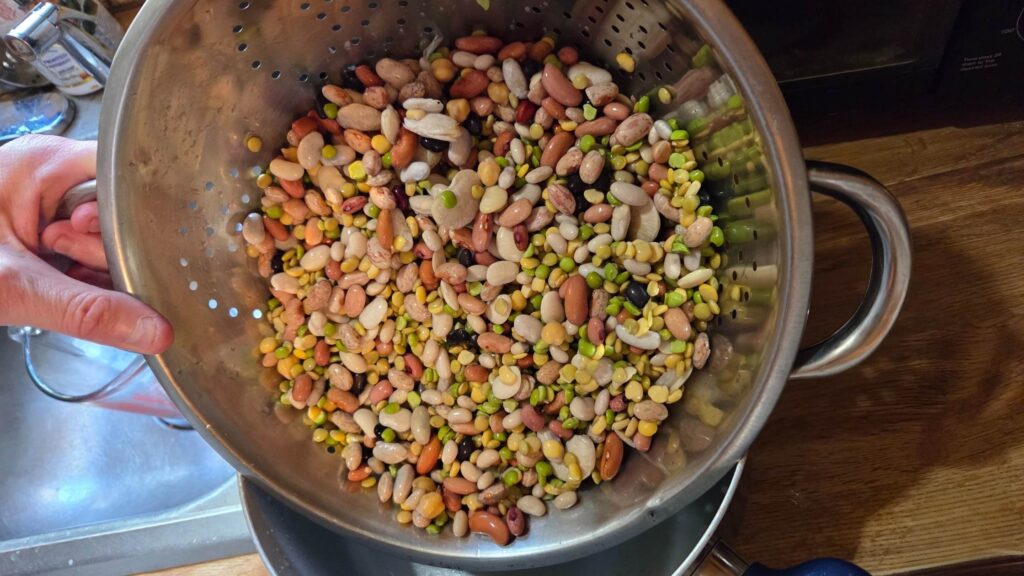
Living frugally doesn’t have to be extreme to be effective. Financial coach, Dave Ramsey, talks about living on
“rice and beans,” but that’s not in the literal sense. Instead, it means making sacrifices when you’re in the middle of financial chaos and trying to regain your footing. It also means making smarter choices, knowing what to cut and what to keep, what your needs are and what’s “extra” in your life. Small changes lead to small wins, but those small wins build momentum like a snowball rolling down a hill toward bigger goals.
Read This Next If You’re Building a Frugal Life That Lasts
If this way of thinking about frugal living resonates, these pieces expand on the habits and decisions that make it work in everyday life:
- How to Save Money on Groceries Without Clipping Coupons
- Start Living Frugally with These Easy Home Swaps
- Can Frugal Living Help You Enjoy More for Less?
- 11 Genius Money Hacks to Save More Cash
- 7 Simple Budgeting Tips for a Stress-Free Thanksgiving
Adapt Frugal Living For Your Life, Not Someone Else’s
Living frugally is much easier than most people think. Extreme frugalism isn’t for everyone. Most of us still want to enjoy life. We just need to be mindful about how we do it.
Frugal living should support your life, not shrink it.
If you liked this article, subscribe to the Frugal Hen blog for more simple living tips.
 0
0 0
0 20
20
 10
10